
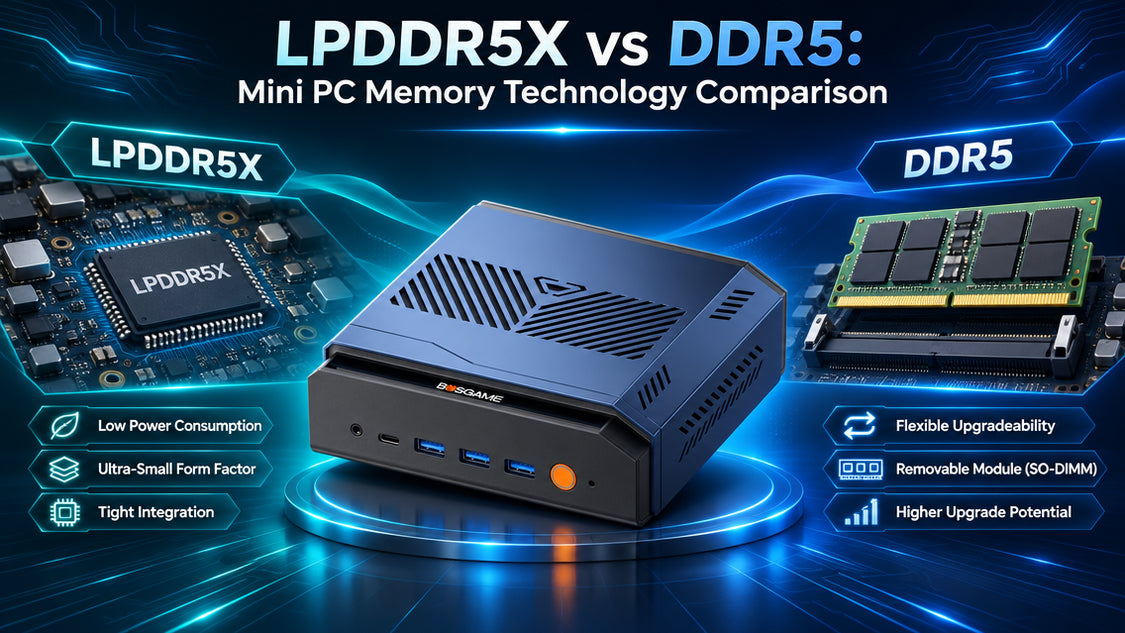
Memory selection deserves attention when buying a mini PC because it influences system performance, power draw, and future expansion possibilities. LPDDR5X and DDR5 are two frequently encountered options, and each brings distinct strengths. Which one fits your requirements better? This guide compares LPDDR5X vs DDR5 to support a more informed purchase decision.
Understanding LPDDR5X
The acronym LPDDR refers to Low Power Double Data Rate. LPDDR5X improves on LPDDR5 by aiming at higher throughput while keeping power use low. Manufacturers usually solder this memory directly to the mainboard instead of placing it in user-accessible slots. Such integration helps reduce system size, but buyers normally must decide on capacity at the time of purchase, since later expansion is generally unavailable.
Understanding DDR5
DDR5 represents the fifth generation of Double Data Rate memory and is intended for broad computing purposes. In mini PCs, it often appears as SO-DIMM modules installed in dedicated mainboard slots. Unlike soldered LPDDR5X, removable DDR5 modules usually provide more freedom to replace or expand memory. For example, the BOSGAME VTA-439 mini PC uses DDR5 memory and features two SODIMM slots, allowing for expansion up to 256GB.
LPDDR5X vs DDR5: Main Distinctions
LPDDR5X and DDR5 prioritize different goals in terms of design, energy efficiency, speed, and upgrade options. For mini PC buyers, the key questions are how each type affects performance, power consumption, and future expansion. The table below summarizes the primary differences.
| Feature | LPDDR5X | DDR5 |
|---|---|---|
| Data rate | Often lower | Often higher |
| Energy use | Typically lower | Typically higher |
| Mounting | Soldered to the mainboard | Usually uses SO-DIMM modules |
| Upgrade path | Normally fixed | Can be upgraded |
Memory Speed
Speed matters in any LPDDR5X vs DDR5 comparison. Memory data rates are expressed in MT/s, or megatransfers per second, showing how many transfers happen each second. DDR5 usually delivers higher throughput than LPDDR5X, which can benefit memory-heavy workloads. LPDDR5X reaches data rates up to 8,533 MT/s, whereas DDR5 goes further, up to 8,800 MT/s.
Power Consumption and Efficiency
LPDDR5X is built to use less power than conventional DDR5, which makes it more energy-efficient for mini PCs. Memory is only one part of total system power use, but greater efficiency can still lower overall energy consumption and heat output. This matters for compact mini PCs, where internal space is limited and thermal design is important. Users who value energy efficiency and quieter operation may find LPDDR5X appealing.
Physical Design and Upgradeability
Installation method is another major consideration for mini PC buyers. LPDDR5X is generally soldered to the mainboard, saving space but usually preventing later replacement or expansion. DDR5 in mini PCs commonly uses removable SO-DIMM modules, so users can replace modules or raise capacity when the system supports it. This is a clear advantage of DDR5 memory.
LPDDR5X vs DDR5: Which Should You Pick?
The appropriate memory type depends on your requirements and future plans. If you want the option to expand memory later, DDR5 is the stronger choice. It also deserves consideration if higher memory speed matters, especially for gaming and other performance-intensive work. Conversely, if you do not intend to upgrade memory and prefer lower power consumption, LPDDR5X may suit you better. Weigh performance needs, upgrade plans, and energy-efficiency priorities before deciding.
Frequently Asked Questions
1.Is LPDDR5X superior to DDR5?
There is no universal winner. LPDDR5X usually has an efficiency advantage, while DDR5 generally offers more upgrade flexibility. The better option depends on performance requirements and whether future expansion is planned.
2. Can LPDDR5X memory in a mini PC be upgraded?
In most cases, no. LPDDR5X is normally soldered to the mainboard, so capacity cannot be expanded or replaced after purchase.
3. Can DDR5 memory in a mini PC be upgraded?
Yes, provided the mini PC uses removable DDR5 SO-DIMM modules and supports the intended capacity. Depending on available slots, you may need to swap existing modules instead of simply adding more.
4. Does LPDDR5X use less power than DDR5?
Typically, yes. LPDDR5X is designed for lower power consumption, which makes it suitable for energy-efficient mini PCs.
5. Which memory type is preferable for gaming on a mini PC?
DDR5 may be more attractive when memory speed and upgrade flexibility are priorities. Still, gaming performance also relies heavily on the CPU, GPU, and overall memory configuration.
Conclusion
DDR5 and LPDDR5X each provide distinct benefits for modern mini PCs, offering different balances of performance, efficiency, and flexibility. The right selection comes down to how you use the system and what you plan for the future. BOSGAME provides numerous mini PC models covering different memory technologies and capacities. Visitors can check the website to identify a configuration suited to routine work, creative projects, or heavier workloads.

Leave a comment
All comments are moderated before being published.
This site is protected by hCaptcha and the hCaptcha Privacy Policy and Terms of Service apply.